Services
Radon testing
Radon is a naturally occurring radioactive gas that comes from the ground and can enter your home through cracks, gaps and openings in the foundation. It’s invisible, odorless and tasteless, so the only way to know if your home has elevated radon levels is to test.
Protecting your home and your health
We use professional radon testing equipment to measure the radon levels inside your home over a minimum 48-hour period. Our equipment continuously monitors radon levels throughout the test to give accurate, reliable results.
Once testing is complete, we provide a detailed report explaining your home’s radon levels and whether additional action is recommended.
The Environmental Protection Agency (EPA) recommends taking steps to reduce radon when levels reach 4.0 pCi/L or higher. Even homes with existing mitigation systems should be tested periodically to make sure those systems are working properly.
What we look at
- Continuous electronic monitoring for a minimum of 48 hours
- Results compared against the EPA action level of 4.0 pCi/L
- A detailed report explaining your home’s radon levels
- Whether additional action is recommended
- Periodic retesting of homes with mitigation systems
Who it’s for
- Home buyers
- Homeowners who have never tested
- Homes with a mitigation system, to confirm it’s working
The Grizzly difference
We take the time to explain our findings, answer your questions, and make sure you understand what matters. No scare tactics. No unnecessary upselling. Just thorough inspections, clear answers, and honest service.
How long does it take?
Testing takes a minimum of 48 hours, with results typically available shortly after the equipment is collected.
What do you receive?
A detailed report of your home’s radon levels and whether additional action is recommended.
Why test?
Radon is the second leading cause of lung cancer in the United States. Testing is a simple way to help protect your family’s health and gain peace of mind.
Radon in Colorado
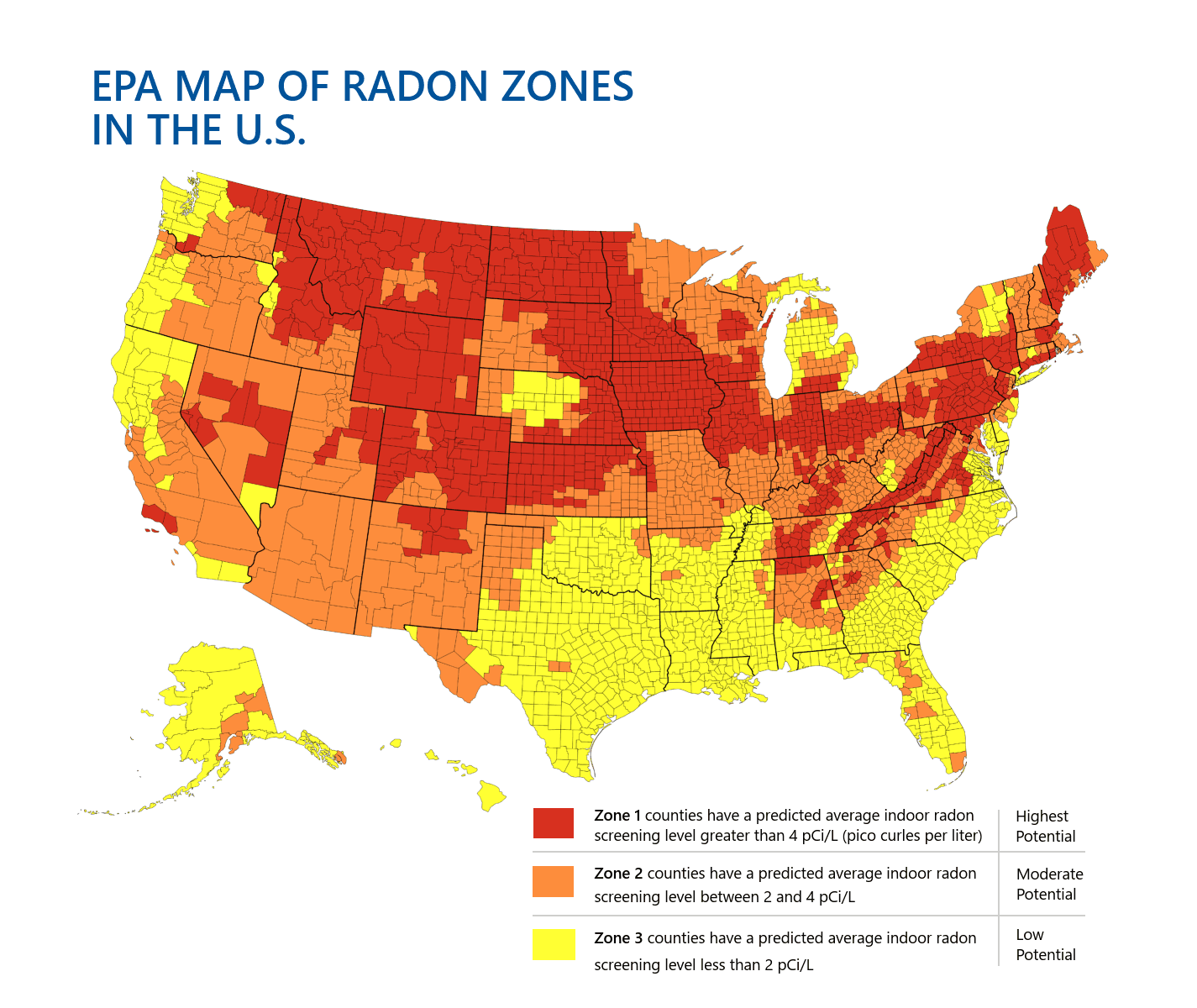
Most of Colorado sits in EPA Zone 1, the highest radon potential, where the predicted average indoor level is above 4 pCi/L. That is why we recommend a radon test with nearly every inspection here.
Pair it with
For buyers, roof to foundation.
Learn more →Rental inspectionsMove-in, move-out and portfolio checks for property managers.
Learn more →New build warrantyCatch builder defects before the warranty runs out.
Learn more →Sewer & septic line inspectionsCamera inspection of the line to the city sewer or septic tank.
Learn more →